Osaka, Japan
DXR / CC BY-SA 4.0

City guide ·Japan

Where to stay in Osaka

Osaka's stay decision is unusually simple: the city has two centres four kilometres apart, and most of the argument is which one you sleep in. Minami — Namba and Shinsaibashi — is the side people come for, with the food, the nightlife and the one train that reaches Kansai airport without a change, at the price of no quiet at any hour. Kita around Osaka Station is the other half: the biggest hotel cluster in western Japan and half an hour to Kyoto, Kobe and Nara, but concourses rather than streets. Choose Semba for a quiet room between the two, Tennōji for trains out of the city and a park, Shin-Ōsaka when the Shinkansen decides the trip, the Bay if you are doing Universal Studios, and Shinsekai when the budget decides.

7 areas reviewed7 hotels selectedLast reviewed · 14.08.2026

Start here

What kind of trip are you planning?

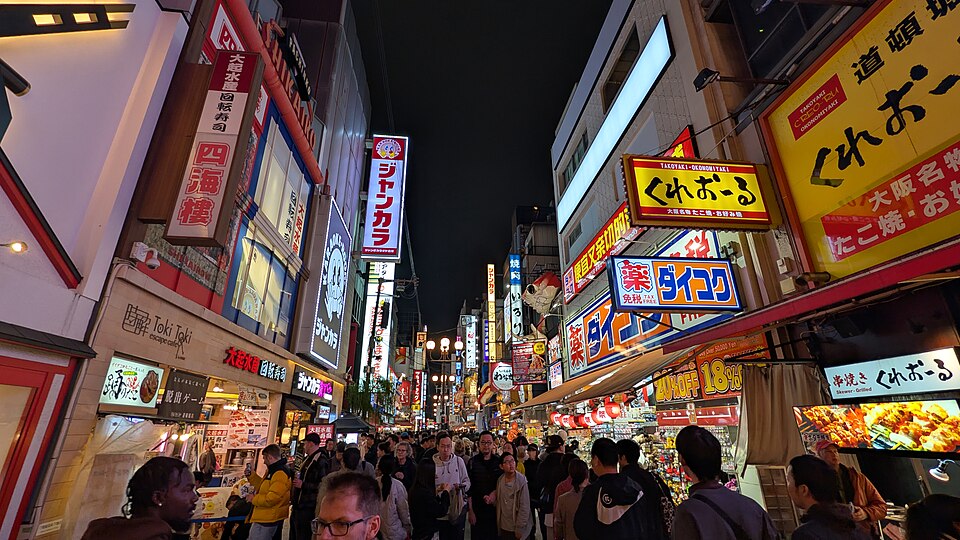
A Dōtonbori street at night packed with people under stacked neon signsJoli Rumi / CC BY-SA 4.0

Best overall

Minami — Namba & Shinsaibashi

Osaka has two centres four kilometres apart and this is the one people come for: the eating, the walking and the one train that reaches the airport without a change.

Minami is the southern centre: Dōtonbori and its canal, the covered length of Shinsaibashi-suji, the food streets of Sennichimae and the Kuromon market on its edge, Amerikamura west of it and the electronics of Nipponbashi to the south. It is the loudest, densest and most legible part of the city, and it is where Osaka's reputation for eating comes from. Namba underneath it is a transport knot in its own right, including the one train that reaches Kansai airport without a change. What you give up is quiet, and there is no version of this area that is quiet.

See the area guide →
Sightseeing
8.0
Walkability
9.4
Transport
9.0
Food
9.8
Price level
Upscale

Where the areas are

The 7 areas we cover, drawn. Where they sit in relation to each other is the thing a list of names cannot tell you, and it is most of the decision.

BayKitaTennōji & AbenoSembaMinamiShin-ŌsakaShinsekai & Ebisu

Boundaries: MLIT and e-Stat 2020 census, edited. Water: OpenStreetMap contributors, ODbL.

Step one · choose the area

7 areas, 7 different Osakas.

Price
7 areas
A Dōtonbori street at night packed with people under stacked neon signsJoli Rumi / CC BY-SA 4.0
Upscale
No. 01

Minami — Namba & Shinsaibashi

Minami is the southern centre: Dōtonbori and its canal, the covered length of Shinsaibashi-suji, the food streets of Sennichimae and the Kuromon market on its edge, Amerikamura west of it and the electronics of Nipponbashi to the south. It is the loudest, densest and most legible part of the city, and it is where Osaka's reputation for eating comes from. Namba underneath it is a transport knot in its own right, including the one train that reaches Kansai airport without a change. What you give up is quiet, and there is no version of this area that is quiet.

Sightseeing8.0
Walkability9.4
Transport9.0

Best for

A first trip, where the point is to eat and to walk · Travellers arriving from or leaving to Kansai airport
See the area
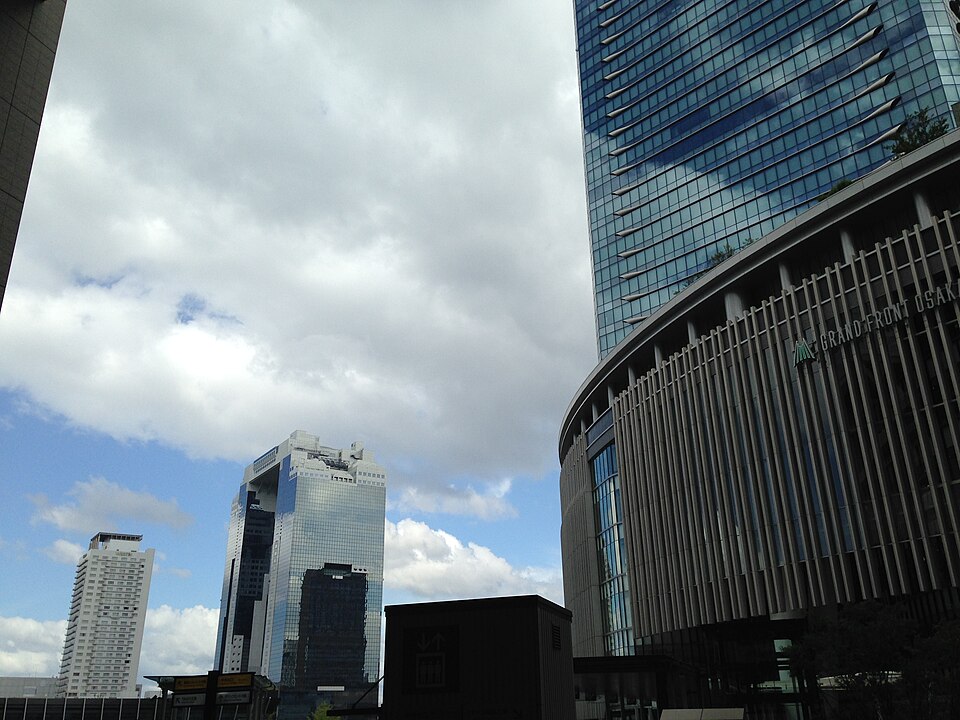
The curved timber-screened front of Grand Front, the Sky Building behindそらみみ / CC BY-SA 4.0
Upscale
No. 02

Kita — Umeda & Osaka Station

The northern centre, and the other half of the only real question Osaka asks. One station complex carries JR, three subway lines, Hankyu and Hanshin, and around it sits the largest hotel cluster in western Japan, the department stores, and Nakanoshima on the river below. This is where you stay if Osaka is a base rather than a destination: Kyoto, Kobe and Nara are all half an hour or less. It is busy rather than lively — the eating is good and the drinking is expensive and largely behind closed doors in Kita-Shinchi.

Sightseeing6.5
Walkability7.5
Transport9.5

Best for

Day trips to Kyoto, Kobe and Nara · Business-grade rooms with lifts and luggage rooms

See the area
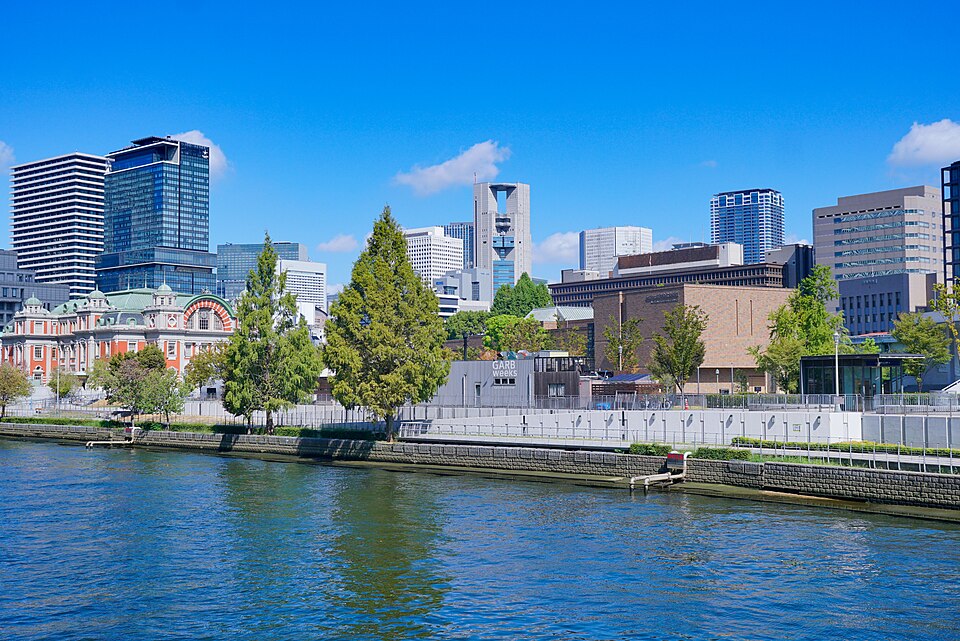
The river at Nakanoshima, the red-brick public hall among office towers掬茶 / CC BY-SA 4.0
Mid-range
No. 03

Semba — Honmachi & Kitahama

The old merchant grid between the two centres, laid out on the river. Pharmaceutical houses on Dōshōmachi, the stock exchange at Kitahama, a run of pre-war buildings, and business hotels at business rates. It empties at the weekend, which is exactly why people choose it: it is a fifteen-minute walk or one subway stop from either centre, and you can hear yourself think.

Sightseeing5.5
Walkability8.5
Transport8.5

Best for

A quiet room between the two centres · Longer stays

See the area
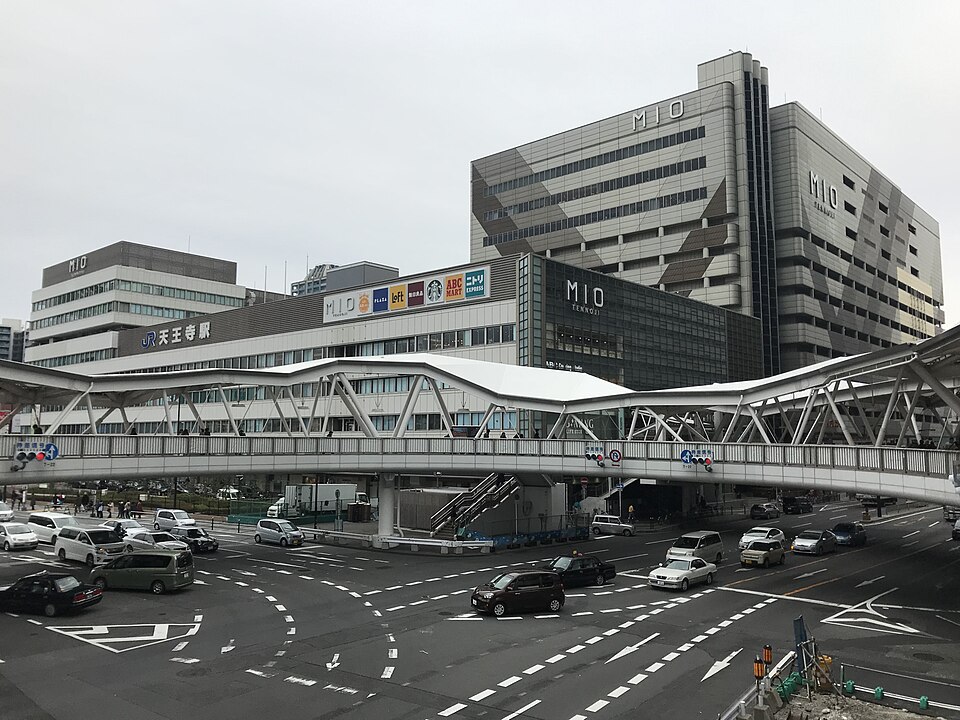
Tennōji station and its department store above a wide crossingそらみみ / CC BY-SA 4.0
Mid-range
No. 04

Tennōji & Abeno

The southern knot: the JR loop, the Kintetsu line to Nara, two subways, a park with a zoo in it, Shitennō-ji, and the tallest building in Japan standing over the station. It is cheaper than either centre, better connected than most of the city, and it has the one thing central Osaka lacks — open ground.

Sightseeing7.0
Walkability7.5
Transport9.0

Best for

Day trips to Nara and Kōya-san · Families who want a park

See the area
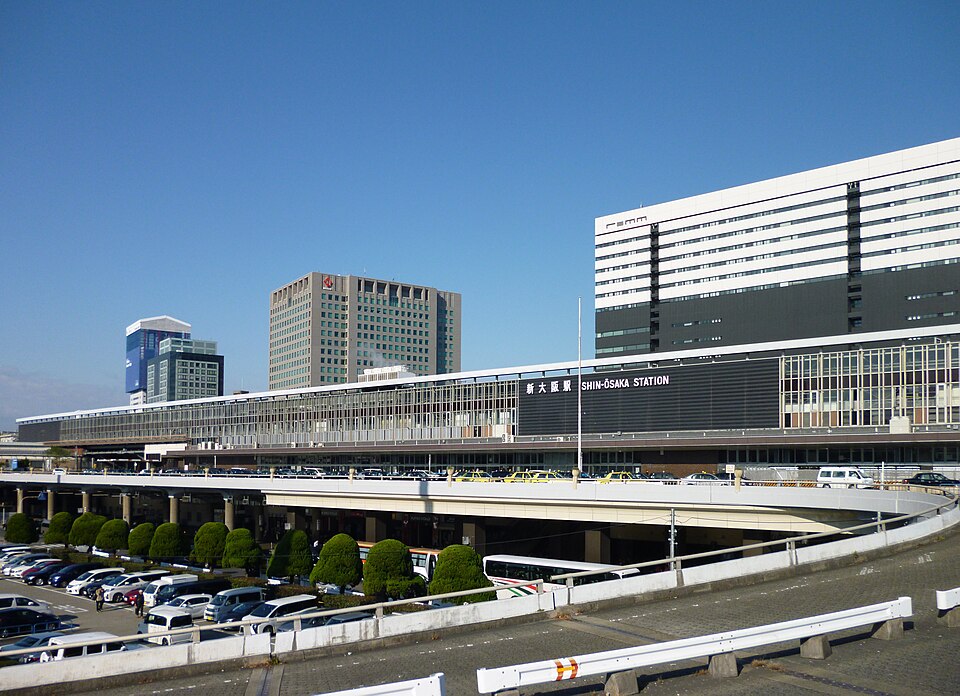
The station frontage above the taxi rank in the sunEXECUTOR / CC0
Mid-range
No. 05

Shin-Ōsaka

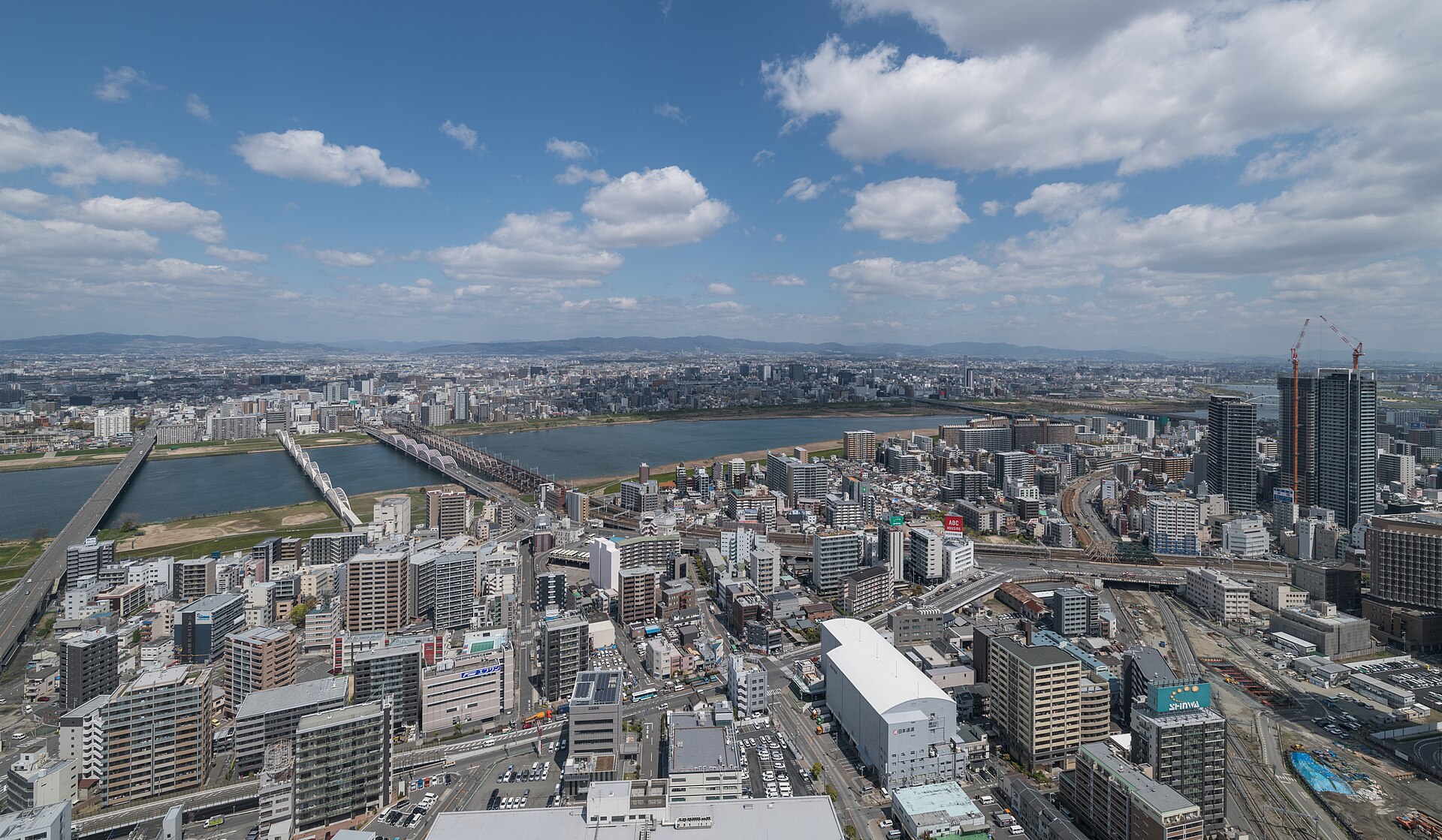
The Shinkansen station, and almost nothing else. Offices, business hotels and a subway stop, on the north bank of the Yodo. Nobody walks anywhere here for pleasure. It earns its place on this list the way Kyoto Station does: when the trains decide the trip — an early departure west, a late arrival, a base for several cities in a week — this is the right answer, and a guide that hides it is not being helpful.

Sightseeing3.5
Walkability5.5
Transport9.5

Best for

Early Shinkansen departures and late arrivals · A week spent moving between cities

See the area
Upscale
No. 06

Bay — Universal Studios

A single-purpose area on reclaimed land west of the city: the park, the hotels built to serve it, and the Yumesaki line back to the centre. Nothing here is incidental — you are staying by the gates because you are going through them, probably early and probably with children. Treated as a general Osaka base it is a poor one, and it is not offered as one.

Sightseeing6.0
Walkability6.5
Transport5.5

Best for

Families doing the park · Early entry, and going back to the room at midday

See the area
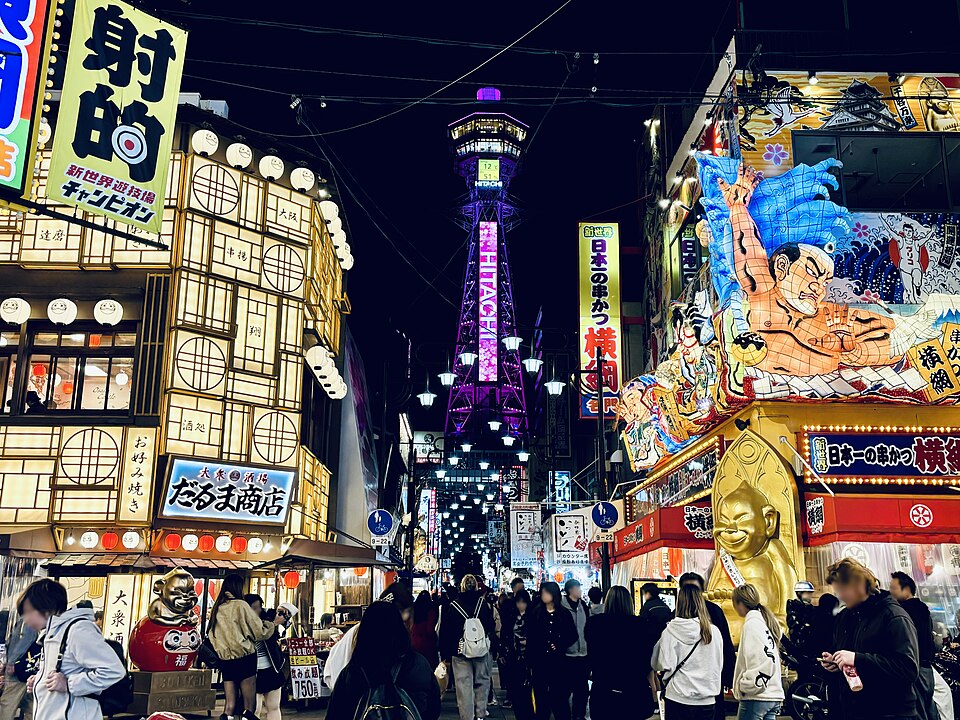
Tsūtenkaku lit above a crowded street of kushikatsu signsSakai Yayoi / CC0
Budget
No. 07

Shinsekai & Ebisu

Under Tsūtenkaku, ten minutes from Minami: kushikatsu counters, a tower built in 1912 and rebuilt in 1956, and the cheapest rooms of any area in any city this site covers. They are cheap for a reason, and it should be said plainly rather than hinted at. Immediately south is Airin, Japan's largest day-labourer district; much of the accommodation here and around Shin-Imamiya was built as workers' lodging and later converted for travellers, which is why a private room costs what a hostel bed costs elsewhere. It is a residential district of people living on low incomes — not a spectacle, and not a warning.

Sightseeing6.5
Walkability7.0
Transport8.0

Best for

Travellers watching what they spend · Anyone who wants Minami on foot without Minami's rates

See the area

Compare the areas

No overall score. Every traveller weights these differently.

AreaPriceSightseeingWalkabilityTransportFoodNightlifeQuietnessFamiliesValue
Minami — Namba & ShinsaibashiUpscale8.09.49.09.89.52.56.56.5
Kita — Umeda & Osaka StationUpscale6.57.59.58.57.54.57.56.0
Semba — Honmachi & KitahamaMid-range5.58.58.57.03.57.56.58.0
Tennōji & AbenoMid-range7.07.59.07.05.06.07.58.0
Shin-ŌsakaMid-range3.55.59.55.03.06.57.07.5
Bay — Universal StudiosUpscale6.06.55.55.03.07.09.55.5
Shinsekai & EbisuBudget6.57.08.07.56.05.04.59.5